
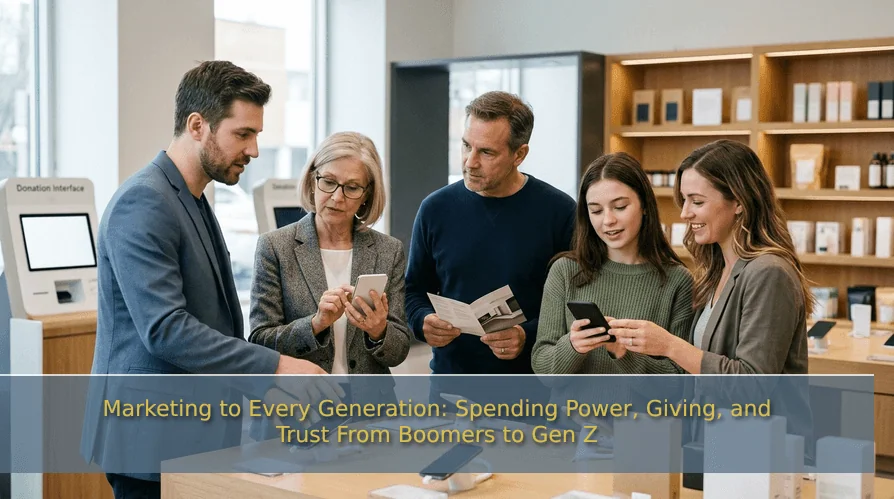
Marketing to Every Generation: Spending Power, Giving, and Trust From Boomers to Gen Z: cross generational marketing works when your brand promise remains consistent while changing the proof, channel, and tone for each generation. Older buyers continue to spend and give at high levels, while Gen Z is the fastest-growing source of new income. In between, Gen X has considerable buying power and receives far less attention. What each generation counts as trustworthy was set in its formative years, not by its age. Brands that learn those trust signals stop alienating one group while chasing another.
Key Takeaway
No single generation is “the market” anymore. Older buyers are active and well-funded, younger buyers will soon control a growing share of global income, and every group decides whom to trust in a different way. Those that win treat generational insight as a starting hypothesis, then test it against their own customers.
- Why one message no longer reaches every generation
- Where spending power and charitable giving sit by generation today
- What trust looks like to Boomers, Gen X, Millennials, and Gen Z
One promise, several ways of proving it.
Why One Message No Longer Reaches Everyone
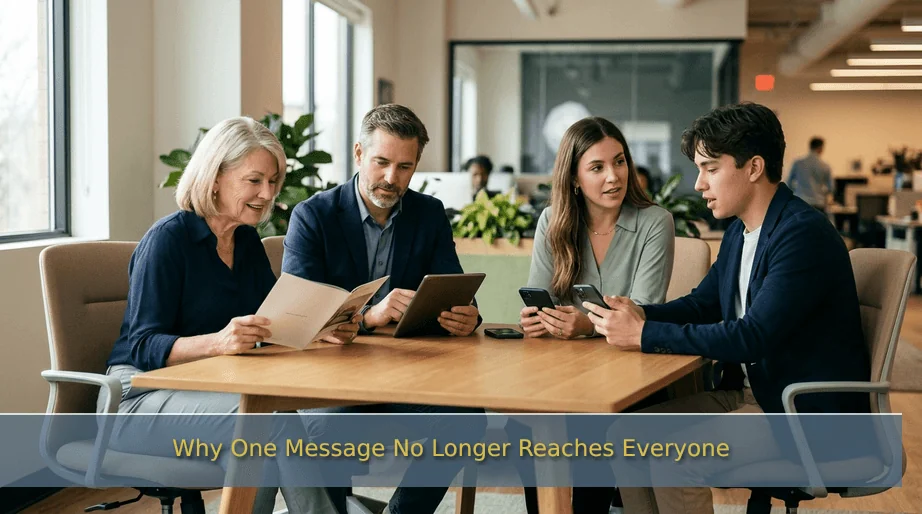
Most campaigns are built for one imagined buyer. That buyer usually looks like whoever the creative team pictures as “modern,” making everyone else left to translate. A message tuned for one generation often falls flat with another, sometimes actively pushing them away.
The gap is not mainly about channels, though these matter. It is about how each generation decides a brand deserves its money. Baby Boomers (1946-1964) and Gen X (1965-1980) tend to want a feel for a company’s track record and a relationship before committing. Millennials (1981-1996) and Gen Z (1997-2012) value peer reviews, social proof, and visible transparency.
Cross generational marketing does not mean five campaigns for five generations. It requires one brand promise with a deliberate choice of proof, tone, and channel for each audience you serve. Generation works best layered with a life stage. For example, a 35-year-old first-time homebuyer and a 35-year-old parent of three share a cohort but not a shopping list.
Summary: Keep the promise fixed and adapt how you prove it, because each generation weighs proof differently.
Where the Money Is: Spending Power by Generation
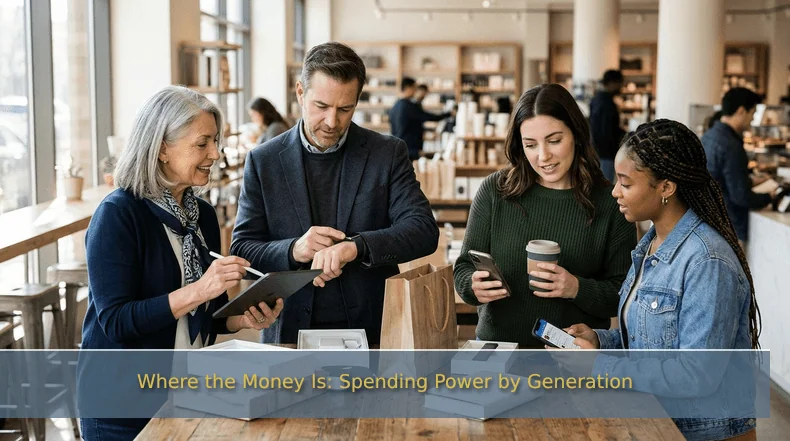
Veteran buyers are not leaving the market. AARP’s 2026 Tech Trends research found that 71% of adults 50 and older bought technology in 2025, spending an average of $756. That is a category many marketers still pitch almost entirely to younger faces.
The fastest growth is at the other end. NIQ and World Data Lab project Gen Z spending will reach $12 trillion by 2030, and the Bank of America Institute expects Gen Z’s global income to reach $36 trillion within about five years. Gen Z buyers are still forming brand habits, meaning the loyalty you earn now compounds.
In the middle, Millennials have moved from surviving to building homes, families, and management careers. Gen X carries the heaviest load, often supporting children and aging parents at once. For both, “luxury” has shifted away from logos toward experiences, time off, and being debt-free. Boomers, many now with additional free time, spend on the travel and passions they put off for decades.
Summary: Spending power is spread across every generation, so a plan that only courts the youngest buyers leaves real money on the table.
How Each Generation Gives
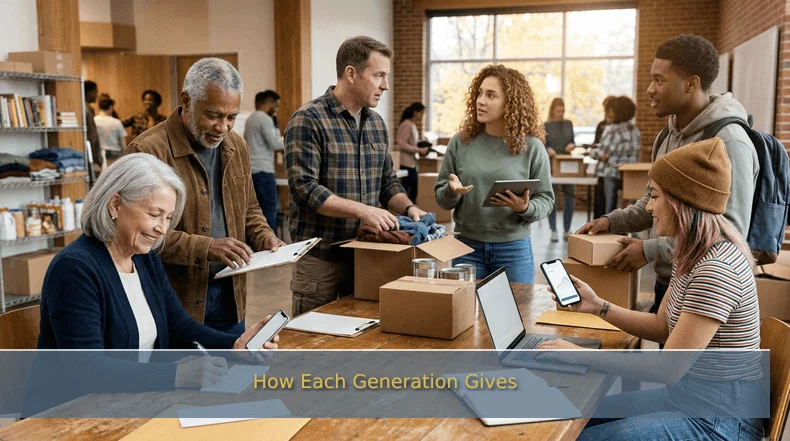
Generosity is not fading. According to Giving USA 2026, Americans gave $617.20 billion to charity in 2025, up 5.7% from the year before, and individuals accounted for $394.2 billion of it. The question for nonprofits and cause-minded brands is not whether people give, but how each generation prefers to.
The Silent Generation (1925-1945) and Boomers tend to give steadily and loyally, often to several organizations at once, gravitating toward their place of worship, local services, and veterans. Never take that loyalty for granted. A thoughtful thank-you does more to keep these donors than another appeal.
Gen X came of age amid headlines about institutional scandals, so many Xers give with a skeptical eye and want to follow where the money goes. They also donate time, through hands-on volunteering. Millennials and Gen Z often start with smaller gifts but a louder voice. These generations share causes, rally peers, and expect organizations to show their values in action. Their giving tends to grow as their careers do.
Summary: Every generation gives, so match your ask to how each one wants to see its impact: loyalty and gratitude, transparency, or shared purpose.
What Trust Looks Like to Each Generation
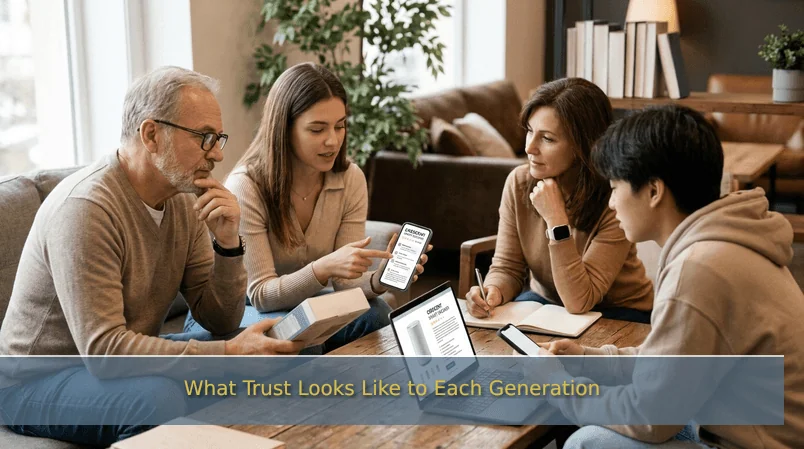
Trust is the ClashPoint that matters most in marketing. The 2026 Edelman Trust Barometer found that only 32% of people think the next generation will be better off, a mood that makes every buyer quicker to question a brand’s claims. Each generation answers that doubt with a different kind of proof.
Boomers tend to trust experience, credentials, and a real relationship with someone who stands behind the product. Older buyers also notice when they are an afterthought. AARP’s 2026 research found that three in five adults 50 and older say technology is not designed with their age in mind, and data privacy is their top barrier to adopting it. Millennials and Gen Z trust peers, reviews, creators, and brands that are open about how they operate.
Then there is Gen X, the generation marketers keep skipping. When a high-profile smartwatch launched years ago, its ads showed only young adults sending each other doodles, while Xers juggling carpools, careers, and aging parents were the ones who could have used it most. They were overlooked in their 20s, too, and they read that pattern as one more reason to be skeptical. Show Gen X practical value, be straight about cost, and skip the hype.
Summary: Each generation looks for different signs that a brand is worth trusting. Brands that understand those differences can reach one generation without alienating another.
FAQs About Marketing to Every Generation
1. What is cross generational marketing?
It is the practice of reaching several generations of buyers with one consistent brand while adapting proof, tone, and channel for each. It begins from the idea that formative years shape how people judge value and credibility. This does not mean running a separate campaign for every age group. It means knowing which trust signals your own customers respond to. That is the focus of our cross-generational marketing.
2. Which generation has the most spending power?
It depends on the category and the time frame. Older buyers remain highly active, with AARP reporting that 71% of adults 50 and older bought technology in 2025. Gen Z is the fastest-growing group, with spending projected to reach $12 trillion by 2030. Millennials and Gen X carry heavy household budgets in between. A successful plan serves all of them rather than betting on one.
3. How should nonprofits adjust their appeals by generation?
Start with how each group wants to see impact. Older donors respond to loyalty, gratitude, and a long relationship with the cause. Gen X wants transparency about where the money goes and often values volunteering as much as giving. Millennials and Gen Z need to see values in action and share causes. Your website matters too, so refer to tuning your web strategy to all generations.
4. Why do marketers overlook Gen X?
Gen X is a smaller generation sandwiched between two giants, so it often gets less attention by default. Yet many Xers are at peak earning years while supporting both kids and parents. They tend to distrust hype and respond to practical, honest messages about cost and value. Brands that speak to them directly face less competition for their attention. Sales teams can learn to do this in a generational sales workshop.
5. How do I keep older buyers from feeling left out?
Show them in your imagery, design for them, and take their privacy concerns seriously. AARP found that three in five adults 50 and older feel tech is not designed with their age in mind. Make it easy to reach a real person, and explain products clearly without talking down. Our planned guide on selling to the forever young generation covers Boomers in depth. Frontline teams can build the same habits through a generational customer service workshop.
