
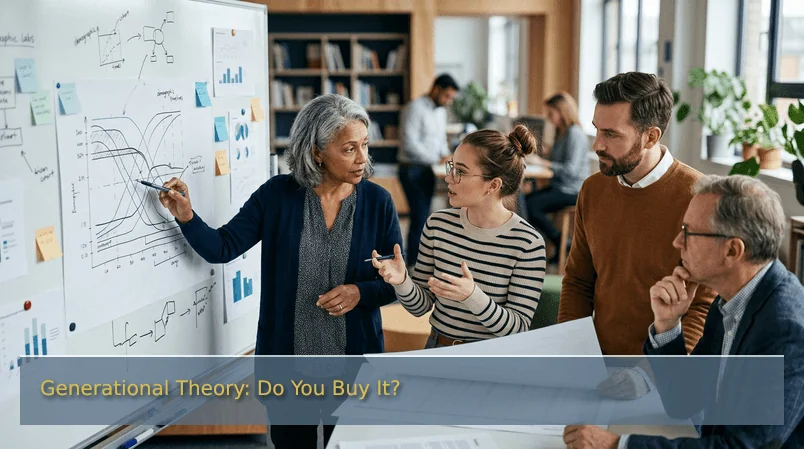
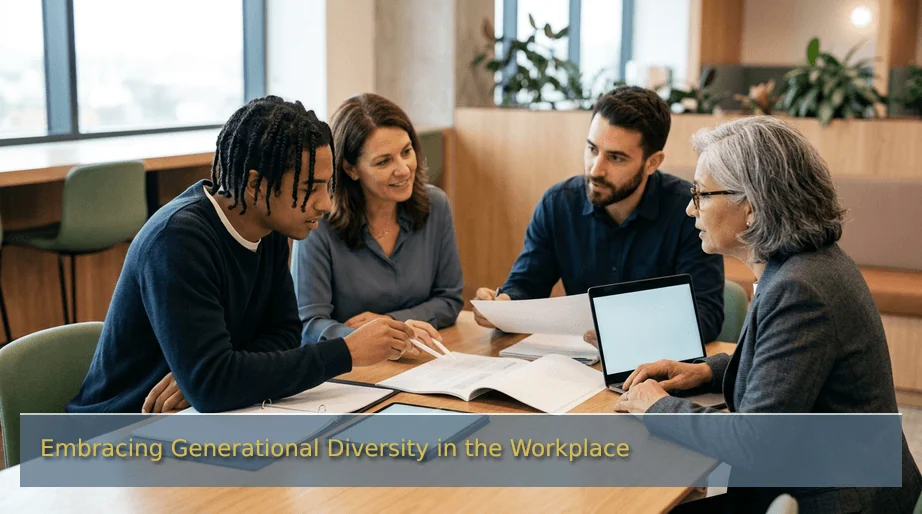
Embracing Generational Diversity in the Workplace: Generational diversity means the intentional inclusion of every age cohort in your workforce, and it is the dimension of inclusion most often left off the agenda. Four generations are present in meaningful numbers today: Baby Boomers born 1946 to 1964, Generation X born 1965 to 1980, Millennials born 1981 to 1996, and Generation Z born 1997 to 2012. The organizations that get this right treat age as a source of complementary strength rather than a problem to be managed, and they build learning that moves in both directions rather than only downward.
Key Takeaway
Generational diversity is the dimension of inclusion organizations are still most comfortable ignoring, and the one where bias gets voiced most openly. The organizations that handle it well do two things consistently: they treat age differences as complementary rather than as a problem to be managed, and they build learning that moves in both directions instead of only downward from senior to junior.
- Why age is treated as a lesser category than race, gender, and ethnicity, and what that costs
- A way to read generational differences that does not flatten them or harden into stereotype
- What makes reverse mentoring genuinely bidirectional, rather than remedial help that insults one party
Four generations, four sets of formative experiences, and an advantage that only materializes if somebody builds it.
Why Age Gets Left Off the Inclusion Agenda
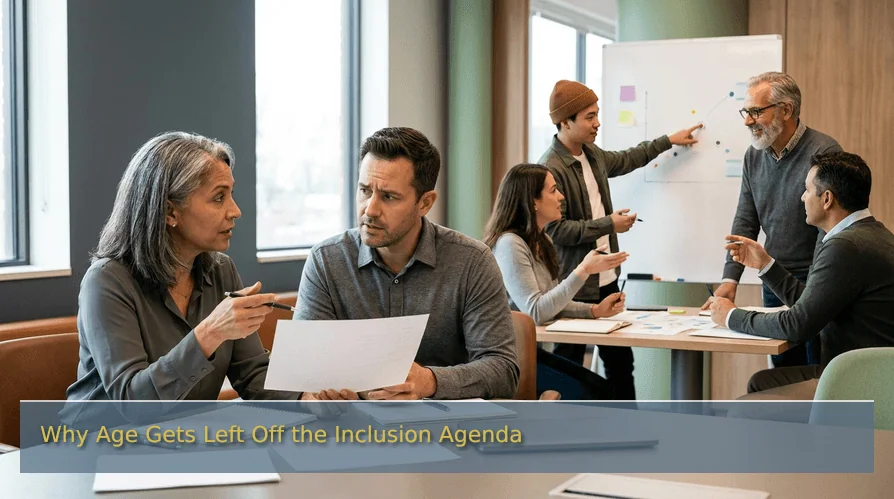
Conversations about diversity, equity, and inclusion tend to concentrate on race, gender, and ethnicity, and for good reason. Age is frequently treated as a lesser category, partly because everyone expects to occupy every age bracket eventually.
That reasoning does not hold up. Ageism operates in both directions and is unusual among biases in how socially acceptable it remains. Assumptions that older employees cannot adapt to new technology, or that younger employees lack seriousness, get voiced openly in rooms where equivalent assumptions about other groups would not survive the sentence.
The cost is concrete. Organizations lose experienced people who conclude they are being managed toward the exit, and they lose early-career talent who conclude there is no path.
Summary: Age bias is the inclusion gap most organizations still tolerate out loud.
Understanding Workplace Generational Differences
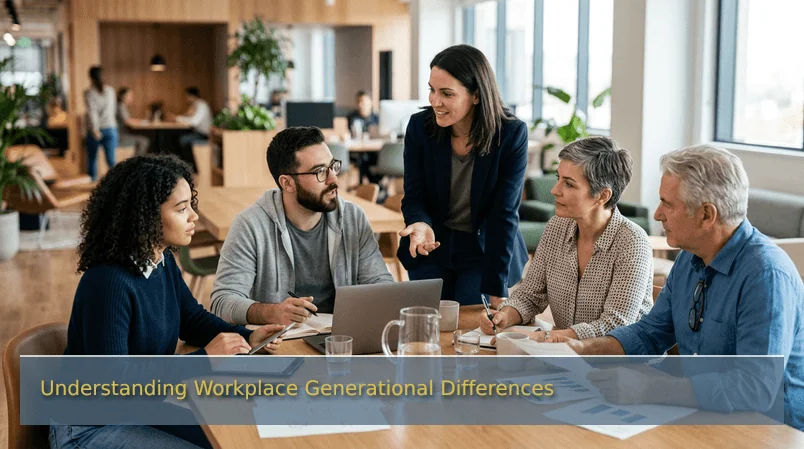
The premise underneath our work is that generational patterns come from shared formative experiences, not from age itself. Someone who entered the workforce during a recession carries different assumptions about job security than someone who entered during a boom, and those assumptions persist long after conditions change.
That is why workplace generational differences are worth understanding rather than flattening. A Gen Xer who prizes autonomy and a Gen Zer who wants a detailed brief are not in conflict about work ethic. They are drawing on different evidence about what produces good outcomes.
The guardrail matters as much as the framework. These are patterns, not predictions. Individual variation within any generation is always larger than the average difference between generations, and a generational lens used to categorize people rather than to understand them does more harm than no framework at all.
Summary: Use the patterns to ask better questions, never to decide in advance who someone is.
Building Learning That Moves Both Ways
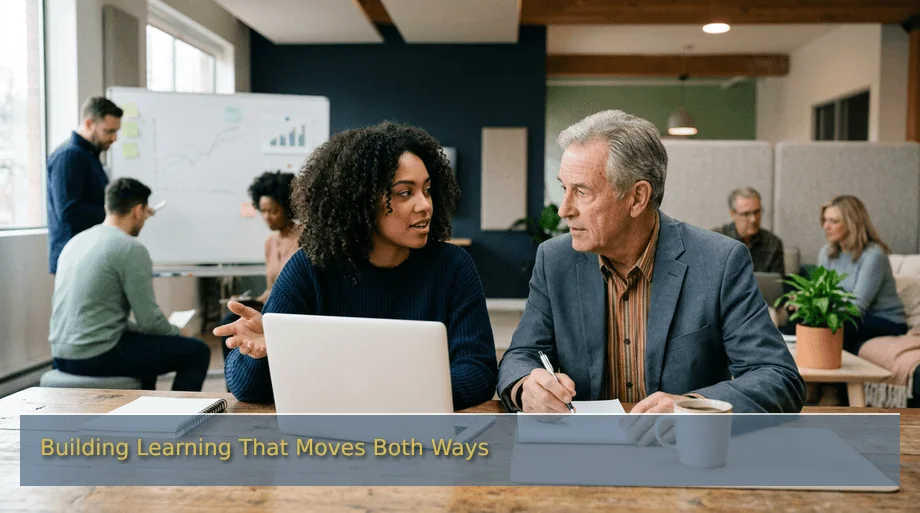
Most organizations still run knowledge transfer in one direction, from senior to junior. That structure wastes half the available value.
Reverse mentoring pairs a younger employee with a senior leader to exchange perspective on technology, communication norms, and emerging expectations. Done well, it is genuinely bidirectional, and the junior participant gains visibility they would not otherwise get. Done poorly, it is framed as remedial help for older employees, which insults one party and burdens the other.
The same principle applies to succession. Boomers and Gen Xers hold institutional knowledge that no external hire can replicate, and the window to capture it narrows every year that retirement approaches without a transfer plan.
Summary: Structure learning as exchange rather than descent, and both participants get something worth their time.
Where Generational Diversity Pays Off
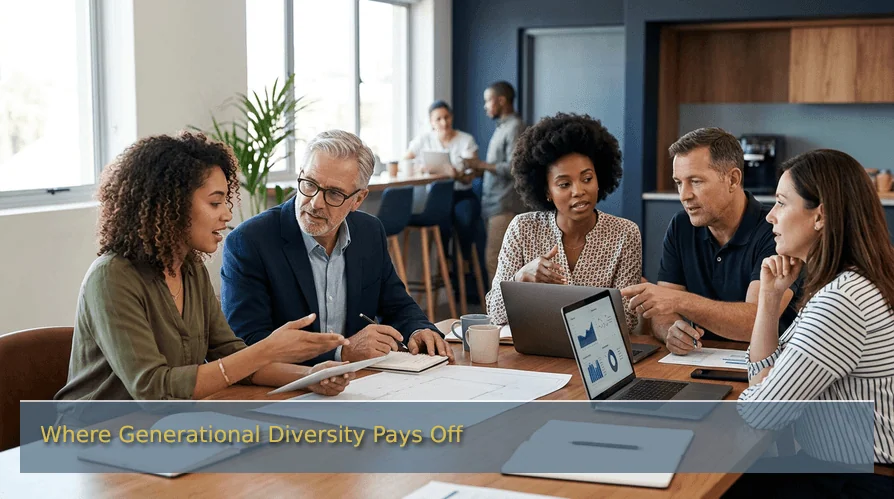
The return shows up in three places. Problem-solving improves when a team can draw on people who have seen a given situation before and people who have never assumed it had to work that way. Change initiatives land better when the communication is built for more than one set of expectations.
Retention improves at both ends. Experienced employees stay longer when their contribution is visibly valued, and early-career employees stay longer when development is real rather than promised.
Getting there requires deliberate design. Age-diverse teams do not automatically outperform homogeneous ones. They outperform when someone has done the work of making the differences productive rather than leaving them to sort themselves out.
Summary: Generational diversity is an advantage that has to be built, not a benefit that arrives with the org chart.
FAQs About Embracing Generational Diversity in the Workplace
1. How many generations are in the workforce today?
Four are present in meaningful numbers as of 2026: Baby Boomers, Generation X, Millennials, and Generation Z. A small remainder of Silent Generation employees are still working, typically in part-time or advisory capacities, and the oldest members of Generation Alpha will not reach working age for several more years. The commonly repeated claim that five generations are working simultaneously was more accurate a decade ago. Four is the practical number for workforce planning purposes today.
2. Is generational diversity part of DE&I or separate from it?
Age is a protected characteristic in most employment law frameworks, which places it squarely within DE&I rather than alongside it. In practice many organizations treat it separately, often housing it under talent or workforce planning instead. Either structure can work. What does not work is leaving it unassigned, which is the most common outcome and the reason age bias tends to persist in organizations that have made real progress on other dimensions of inclusion. Treating age as part of inclusion rather than separate from it is why generational diversity training now sits inside most DE&I programmes.
3. Does reverse mentoring actually produce results?
When it is structured properly, yes. Programs that define clear goals, pair participants deliberately, and frame the relationship as genuine two-way exchange consistently report gains in understanding and in retention of the junior participant. The programs that fail share a common flaw: they position the senior participant as someone needing remedial instruction. That framing produces resentment on one side and discomfort on the other, and it is the main reason well-intentioned programs quietly stop running. Results follow when it is run as cross generational learning, with something expected of both people in the pairing.
4. How do we address age bias without singling people out?
Start with the language in circulation. Phrases like digital native, culture fit, and overqualified frequently carry age assumptions that nobody intends but everybody hears. Reviewing job descriptions, interview questions, and promotion criteria for those signals is low-friction and often surfaces more than expected. Beyond language, look at where age clusters in your organization. If your early-career hires and your senior leaders never work together directly, the structure is producing the separation regardless of intent.
5. What is the biggest risk of getting generational strategy wrong?
Reinforcing the stereotypes you meant to reduce. A generational framework applied carelessly becomes a licence to categorize, and employees quickly recognize when a training session has handed their manager new vocabulary for old assumptions. The protection is consistent emphasis on the reasoning behind patterns rather than the patterns themselves. Once people understand why a colleague approaches work differently, the label stops doing any work and the understanding does it instead. That risk is the reason generational consulting starts with diagnosis rather than a training calendar.
