
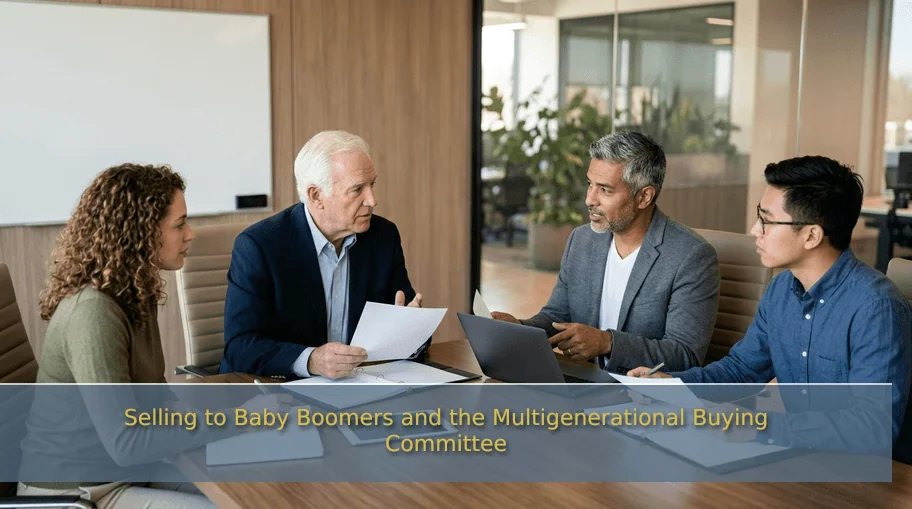

Selling to Baby Boomers and the Multigenerational Buying Committee: Boomers still control a significant share of buying power, and they expect a salesperson to earn Trust through clarity, respect, and follow-through. However, the baton has been passed down to the next generation. Most significant purchases now pass through a group that spans Boomers, Gen X, Millennials, and Gen Z, each judging credibility in a different way. The sellers who win learn to read the whole room rather than the most senior person in it.
Key Takeaway
Boomers are not a fading market, and treating them as one can be costly. Their formative years taught them to Trust authority, value relationships, and look for a clear rationale before making a commitment.
At the same time, the buyers around them want speed, transparency, and proof they can check on their own. Selling well today means serving both expectations in the same deal.
- Why Boomers still hold so much purchasing power, and what they expect from a salesperson
- How to communicate with respect, clarity, and follow-through
- How to sell to a mixed-age buying committee without losing anyone
One buyer, many generations, and a pitch that has to work for all of them.
Why Boomers Still Hold Purchasing Power
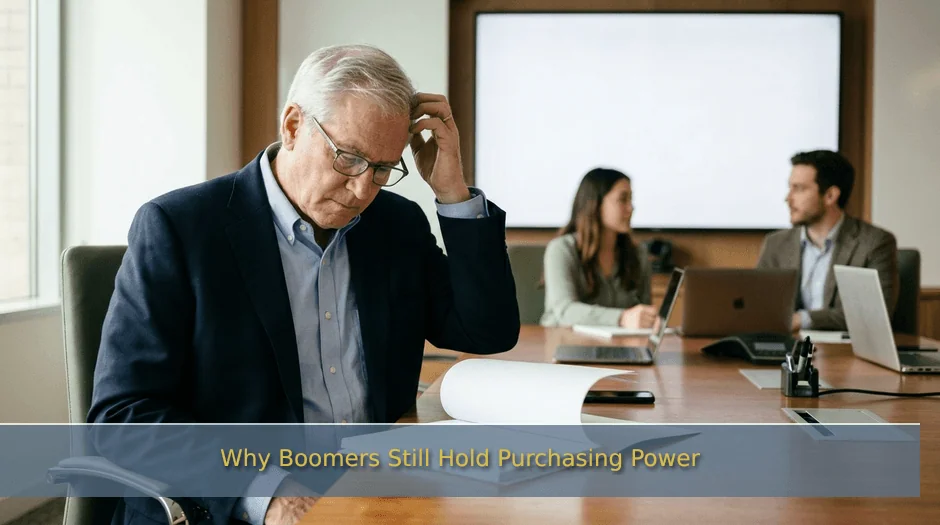
Baby Boomers (born 1946-1964) hold a large share of the country’s household wealth, with many still signing off on major purchases personally and professionally. Yet, sales and marketing attention keeps drifting toward younger buyers. That gap is an opportunity for any team willing to take older buyers seriously.
A tired stereotype says Boomers shun new technology. The data says otherwise. According to AARP Research’s 2026 Tech Trends and Adults 50-Plus report, 71% of adults 50 and older bought technology in 2025, up from 67% the year before, and they spent an average of $756. Two in five planned another tech purchase in 2026.
The same report found that three in five adults 50 and older feel technology is not designed with their age in mind. That is a sales problem hiding in plain sight. Buyers with purchasing power and intent are telling you they feel overlooked.
Summary: Boomers are an active, well-funded market, and sellers who dismiss them leave revenue on the table.
What Boomer Buyers Expect From a Salesperson

Boomers came of age during a wave of grassroots movements, from civil rights to anti-war protests. They saw that questioning the status quo could change it. As buyers, many want to ask questions, weigh their options, and understand what makes an offer worth the price.
Treat that as a starting hypothesis about a group.
Communication: Respect, Clarity, and Follow-Through
The channel matters less than the content and tone. Three habits carry most of the weight. First, simplify: lead with what matters and cut the noise. Second, step up the Formality, with a real subject line, a proper greeting, and correct names and titles. Third, be helpful, not condescending. Explain and advise rather than tell.
Follow-through is where Trust is won or lost. Many Boomers built careers on relationships and a handshake that meant something. Missed callbacks or vague next steps read as a broken promise.
Summary: Give Boomer buyers room to question, communicate with clarity and respect, and do exactly what you said you would do.
Selling to Mixed-Age Buying Committees
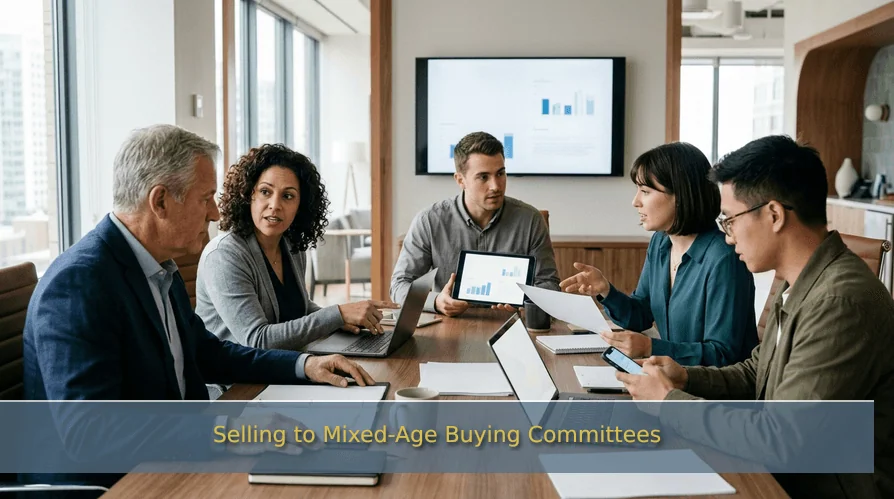
The lone decision-maker is rare in business to business sales. Forrester’s State of Business Buying 2024 research found that, on average, 13 people are involved in a purchase decision, and 89% of purchases involve two or more departments. In most organizations, that group spans three or four generations.
Typically, deals include a Boomer executive sponsor, Gen X economic buyer, and Millennial or Gen Z evaluators conducting the early research. Each defines a compelling case differently. The sponsor may want a relationship and proven track record. Evaluators may want transparency, peer reviews, and a fast path to a decision.
Map the committee before you pitch. For each stakeholder, learn what they need to see, how they prefer to be reached, and where their criteria may conflict with others in the room. Then tailor materials by role, and grant the evaluators content they can share upward on their own.
A common mistake is only pitching to the most senior person. The second is rushing a relationship-first buyer to satisfy a speed-first one.
Summary: Treat the buying committee as several audiences with one decision, and plan for each one.
The Digital Tools Boomer Buyers Actually Use
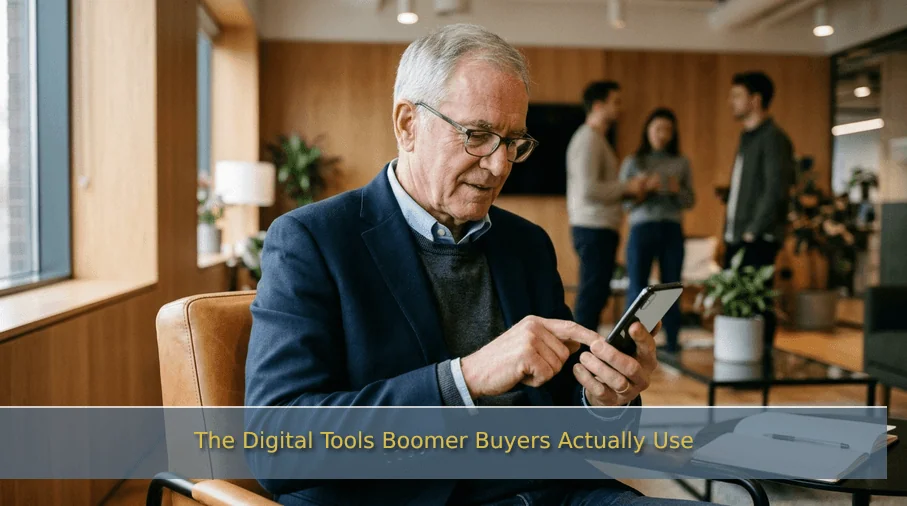
Boomers are digital buyers now. AARP’s 2026 report found that 90% of adults 50 and older owned a smartphone in 2025, up from 55% in 2016. They use an average of 14 digital services, and nine in ten use social media.
That changes how you reach them. Email, video calls, and well-built websites all work, as long as the experience is clear and straightforward. Interest in AI is real but uneven. AARP found AI use among adults 50 and older rose from 18% in 2024 to 30% in 2025, while most still have no interest in AI platforms such as ChatGPT.
Data privacy is the top barrier to adoption in the same research. Be upfront about how you use customer data, and avoid pushing a tool a buyer has not asked for. Pair digital convenience with a human who answers the phone.
Summary: Meet Boomer buyers on digital channels, but keep the experience simple, private, and backed by a real person.
FAQs About Selling to Baby Boomers and the Multigenerational Buying Committee
1. What is the biggest mistake salespeople make with Boomer buyers?
The biggest mistake is assuming Boomers are slow to adopt new products or uninterested in tech. That assumption leads reps to skip them or talk down to them, losing deals. Boomer buyers are active, informed, and willing to spend when the case is clear. They also notice quickly when a seller treats them as an afterthought. Training reps to drop the stereotype is a core goal of our generational sales workshop.
2. Do Boomers prefer phone calls over email?
Not always, and the channel matters less than many sellers think. Many Boomers are comfortable with email, video calls, and text, especially for routine updates. What they notice more is tone. A clear subject line, a proper greeting, and a message that gets to the point are a great starting point. Calls still hold value for important conversations or when a decision is close. When in doubt, ask each buyer how they prefer to be reached and keep to it.
3. How do I sell to a buying committee that spans several generations?
Start by mapping who is on the committee and what each person needs to say yes. Senior sponsors often want relationships and reliable track records, while younger evaluators often want transparency, data, and peer proof. Customize materials for each role instead of one deck for everyone. Expect the internal debate to follow generational lines, and provide each stakeholder what they need to argue your case. Your marketing should support the same plan, which is where cross-generational marketing comes in.
4. Does the sale end at the signature?
No. For many Boomer buyers, the relationship after the sale decides whether they buy again or refer others. Slow responses, confusing handoffs, and unreturned calls undo the Trust a sales team built. Ensure the people who serve the account after the deal understand the same generational expectations as the reps who closed it. That consistency is the focus of our generational customer service workshop.
5. How should our website and content work for older and younger buyers at once?
Aim for clarity first, because it helps every generation. Use readable type, simple navigation, and plain language, and make it easy to reach a real person. Younger evaluators will look for reviews, pricing transparency, and self-service tools, so include those too. Our guide to tuning your web strategy to all generations covers the details. For the broader picture, see marketing to every generation.
