


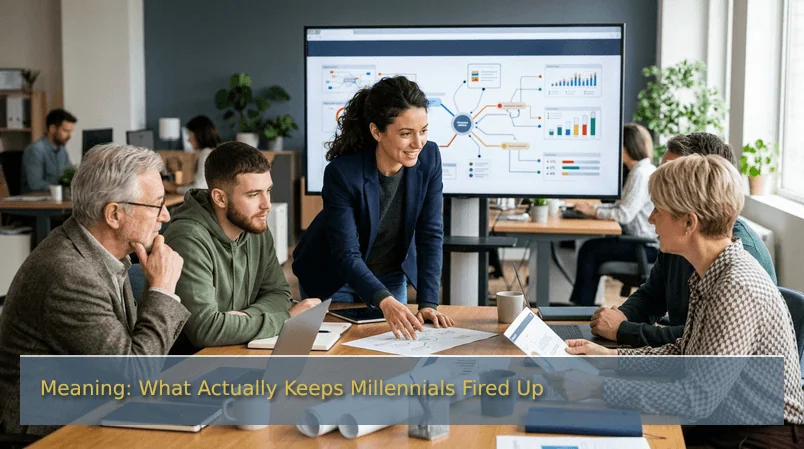
What Actually Keeps Millennials Fired Up: Millennials stay where their work has meaning, and meaning is more concrete than it sounds. It means understanding how a task connects to something larger, being handed problems worth solving, and receiving specific acknowledgment when the work lands. This has not changed as the generation has aged, but the context has: Millennials are now between 30 and 45, they are the largest cohort in the US labor force, and most of them are managing other people. The question is no longer how to motivate young Millennial employees. It is how to keep Millennial leaders from burning out.
Key Takeaway
Meaning sounds abstract, which is exactly why leaders struggle to act on it. In practice, it resolves into three concrete things: understanding why the work exists, being handed problems genuinely worth solving, and receiving specific acknowledgment when the work lands. None of them require a mission statement. All of them require a manager willing to be explicit, and all three still apply now that most Millennials are the ones doing the managing.
- What meaning actually consists of: impact, learning, and knowing a piece of work was done well
- The counterintuitive case for handing stretched people harder problems rather than easier ones
- Why specific acknowledgment outperforms frequent praise, and what the burnout data says about it
The same driver as a decade ago, pointed at people who are now running the teams.
What Meaning Actually Means

Ask a leader to create meaning at work and you usually get a pause. The word sounds abstract, and the abstraction is what makes it feel impossible to act on.
In practice, meaning comes down to three things Millennials consistently name: understanding the impact of their role, being given genuine opportunities to learn, and having a clear sense that a piece of work was completed well. None of those require a mission statement. All of them require a manager who is willing to be explicit.
This is where millennial motivation gets misdiagnosed. A Millennial who has disengaged is rarely asking for more praise. They are usually asking why the work exists.
Summary: Meaning is not a feeling you generate, it is context you provide.
Give Them Problems, Not Just Tasks

Millennials are goal-driven and respond well to being handed something genuinely difficult. A defined problem with a real deadline and room to determine the approach reliably produces better work than a well-specified task with no ambiguity in it.
The instinct many managers have is protective: shield a stretched team from anything harder. It usually backfires. Work that is comfortable and inconsequential drains motivation faster than work that is demanding and matters.
Start smaller than you think you need to. A single meaningful problem, clearly owned, does more for engagement than a restructured role.
Summary: Difficulty is not the enemy of engagement, insignificance is.
Connect the Task to the Whole

It is easy for anyone to lose sight of how their daily work contributes to anything, and easier still for people several layers from the outcome.
Regular, specific check-ins that show how a particular report, decision, or conversation moved something forward are unglamorous and highly effective. The emphasis is on specific. Generalized praise delivered constantly loses its value quickly, and Millennials, who have heard a great deal of it, discount it accordingly.
As of 2026, insufficient recognition ranks as the second leading contributor to burnout among Millennials and Gen Z, ahead of many workload factors. That is a striking finding, and a useful one, because recognition is far cheaper to address than capacity.
Summary: Specific acknowledgment is a retention tool, and most organizations are leaving it on the table.
What Has Changed as Millennials Have Aged
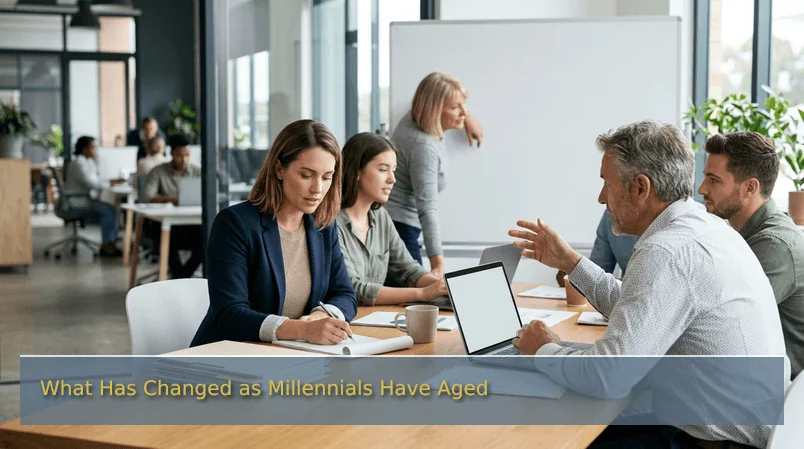
The generation described a decade ago as impatient for promotion has recalibrated. As of 2026, Millennials are prioritizing stability, skills, and well-being ahead of rapid advancement. Only about 6% name reaching a leadership position as their primary career goal, though 67% still want a senior role eventually.
That is not diminished ambition. It is ambition with conditions attached. A promotion that arrives with an unsustainable workload is now a trade many will decline, and the ones declining it are frequently your strongest performers, who have the clearest view of what the role would cost.
Cost of living pressure sits underneath much of this. Financial strain is the top concern this generation reports, and it shapes decisions about relocation, advancement, and how much risk anyone is willing to absorb.
Summary: The shift is from career acceleration to career durability, and it is a rational one.
FAQs About What Actually Keeps Millennials Fired Up
1. What share of the workforce is Millennial now?
Millennials, born between 1981 and 1996, represent roughly 36% of the US labor force as of 2024, making them the largest single generational cohort at work. Gen X follows at about 31%, Gen Z at about 18%, and Baby Boomers at about 15%. In 2026, Millennials are between 30 and 45 years old, which places most of them in mid-career or management roles rather than the early-career positions the popular conversation about them still assumes.
2. Do Millennials really value purpose over pay?
The framing is a false choice, and it has aged poorly. Millennials weigh purpose heavily, but as of 2026, the cost of living is the single largest concern this generation reports, and financial pressure is actively reshaping their career decisions. The accurate version is that compensation is a threshold rather than a motivator. Below a level that feels sustainable, meaning does not compensate. Above it, meaning becomes a significant determinant of whether someone stays. It is the question a millennial speaker is asked most, and the honest answer is that purpose and pay were never competing.
3. How often should managers give recognition?
Frequency matters less than specificity and timing. Recognition tied to a particular contribution, delivered close to when it happened, consistently outperforms scheduled praise regardless of how often it occurs. Constant generalized affirmation actually reduces impact, because it stops carrying information. A practical benchmark is that every direct report should be able to name something specific in the past month that their manager noticed and acknowledged. Many cannot, which is where the burnout data starts to make sense. When several age groups sit in the same room, a generations in the workplace speaker can set expectations for all of them at once.
4. Are Millennials still leaving jobs quickly?
Less than the reputation suggests. Average tenure for Millennials in early-career roles runs around 1.8 years, longer than Gen Z at roughly 1.1 years but shorter than Gen X at about 2.8. Tenure generally lengthens as people move into more senior positions, and most Millennials are now in them. The more relevant retention risk today is not rapid movement between entry roles. It is experienced managers stepping back from advancement, or leaving entirely, when the workload becomes unsustainable.
5. What is the most common mistake managers make with Millennials?
Treating them as early-career employees. The stereotypes that formed around this generation were built when they were in their twenties, and much of the management advice still in circulation assumes that context. Applying it to a 40-year-old managing a team of eight lands as condescending and damages credibility quickly. The second most common mistake is assuming that meaning at work requires a grand organizational purpose, when it usually requires nothing more than explaining why a piece of work matters. Correcting that habit is the practical core of training millennials in the workplace.
